


You write historical fiction because....
You read historical fiction because....
There are as many reasons to write and read as there are writers and readers. We all have our own preferences, our own opinions, our own interpretations.
There seems to be a spiralling debate in the HF world about historical accuracy in fiction and whether it is better to write and read about real people or purely ‘made-up’ people.
I’m feeling a little giddy here.
One of the first things you learn as a researcher of any field is that the more you research, the bigger the differences. First, second, third hand sources – it doesn’t matter. No one has the definitive answer. All is cloaked in bias and propaganda and the changes that time will bring to everything.
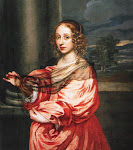
So, you write a novel set in the 17th century... for example. You choose to tell a story about Real People. And then you find it suggested that this is not a very good idea. How dare you presume to give a Real Person those thoughts, actions, motivations when you have no earthly way of verifying a single one of them?
A story is a series of actions and reactions. The human condition is universal. You can’t plot a life but you can plot a novel. Applying absolute certainty to that most ambiguous of creatures – mankind – is surely asking for trouble.
And being 100% ‘right’ in every way, shape and form? Good grief, how boring!
Personal opinion here but –I think I’d be rather flattered to be remembered in print, perfectly or even imperfectly, 400 years from now. The odds of that happening to any of us here today are long but...what a compliment.
Elizabeth Chadwick, author of The Greatest Knight and many other works of Historical Fiction has a fascinating method of research. She uses the Akashic Record.
Now - I often wonder if any of the Real People she has had access to have ever turned round and said ‘Go away and leave me alone. I don’t want to be remembered.’???
The above is a serious question. One that boggles my head.
The point of view is - Historical Fiction is about people. It's written by people and read by people and people are imperfect. End of....!
Showing posts with label writing. Show all posts
Showing posts with label writing. Show all posts
Sunday, 22 March 2009

Tuesday, 17 March 2009
Kamikaze Writing
I've just found a great writing tool.
It's a fun and slightly masochistic way to burn that infernal internal editor.
When I'm feeling stronger....or more desperate....I'll try the Electric Shock Mode with Evil grace period.

Bye, bye internal editor!
Saturday, 28 February 2009
Making a Scene, Part I - What Scene and Why?
In a previous post - Marie and Buckingham - I talked about a spy report that had been found behind a bust at the Prefecture of the Police in Paris in the 19th century.
It was written for Richelieu and tells about the activities surrounding Anne of Austria in May 1625, just after the wedding of Henrietta Maria, when Buckingham visited Paris to escort the new Queen to England.
These events are important to the plot of this novel in progress and, as much as I love the idea of writing a scene wherein Buckingham wears five disguises in one day, it's not practical.
But...
The report includes another incident involving Marie de Rohan and Buckingham which will make a perfect scene.
So - I thought I'd break down the act of writing a scene and post the various steps needed here...just a little exercise shared between you and me!
OK. Let's begin.
First off - I'm writing about real people and real historical events.
Secondly - I already have a draft (all right, several drafts) of the novel so my framework is built. This scene can only go in one place.
Sorted.
Decisions need to be made beforehand because a scene must do several things at once .
It must be written from one point of view.
It must elucidate all the characters involved - their wants, needs and personalities.
It must drive the plot forward.
It must give vital information through setting, backstory, foreshadowing and, most importantly, dialogue.
It must always include a memorable, significant action which plays out in real time.
Oh - and it must have a beginning,a middle and an end.
This scene - we'll call it The White Lady - will be written from Marie de Rohan's point of view.
The players include Marie, Anne of Austria, Buckingham, Pierre la Porte and Wat Montagu.
The plot is moved forward (in fact these events reverberate for years to come) and various personality traits are highlighted.
And, the significant action involves a man dressed as a ghost.
The next step will be preparation. Gathering together all the information needed to write the scene.
Nil desperandum
It was written for Richelieu and tells about the activities surrounding Anne of Austria in May 1625, just after the wedding of Henrietta Maria, when Buckingham visited Paris to escort the new Queen to England.
These events are important to the plot of this novel in progress and, as much as I love the idea of writing a scene wherein Buckingham wears five disguises in one day, it's not practical.
But...
The report includes another incident involving Marie de Rohan and Buckingham which will make a perfect scene.
So - I thought I'd break down the act of writing a scene and post the various steps needed here...just a little exercise shared between you and me!
OK. Let's begin.
First off - I'm writing about real people and real historical events.
This scene can only go in one place.
Secondly - I already have a draft (all right, several drafts) of the novel so my framework is built. This scene can only go in one place.
Sorted.
Decisions need to be made beforehand because a scene must do several things at once .
It must be written from one point of view.
It must elucidate all the characters involved - their wants, needs and personalities.
It must drive the plot forward.
It must give vital information through setting, backstory, foreshadowing and, most importantly, dialogue.
It must always include a memorable, significant action which plays out in real time.
Oh - and it must have a beginning,a middle and an end.
This scene - we'll call it The White Lady - will be written from Marie de Rohan's point of view.
The players include Marie, Anne of Austria, Buckingham, Pierre la Porte and Wat Montagu.
The plot is moved forward (in fact these events reverberate for years to come) and various personality traits are highlighted.
And, the significant action involves a man dressed as a ghost.
The next step will be preparation. Gathering together all the information needed to write the scene.
Nil desperandum
Thursday, 12 February 2009
Joan Grant

Joan Grant wrote and published several novels in the 1930's and 1940's. What her readers didn't know until 20 odd years later was that these novels were not exactly 'fiction'. Joan Grant was a psychic who, she felt, had actually lived her stories.
I've not read any of these novels but I am reading 'Joan Grant - Speaking from the Heart. Ethics, Reincarnation and What it Means to be Human' a selection of her unpublished writings.
Her description of the act of writing caught my attention and had me nodding in agreement.
Here are a couple of paragraphs - - -
'Writing is rewarding to me only when I am certain that my life has overlapped with the lives of others. All of my experiences, all of my senses, have taught me one overriding principal - it is within each of us to be able to help others and to change their lives for the better. This requires a great deal of us...
This is what made writing so complicated for me. The intensity of difficulty I experienced in getting my ideas onto printed pages did not ease up as one work followed another. Certain books, naturally, were written under more pleasant circumstances than others. Some were written quite rapidly. Yet I readily admit that I would find any excuse to put off writing. I'd scrub the kitchen floor, empty bedpans, do anything rather than write. It's a very challenging effort to get an idea into words. When you think you've succeeded, the words are often a shabby imitation of what you really saw or felt. It can be disheartening. Only the tremendous drive of feeling that I had something that needed to be said forced me to persevere, to continue.'
Taken from Joan Grant Speaking from the Heart Ethics, Reincarnation & What it Means to be Human edited by Nicola Bennett, Jane Lahr & Sophia Rosoff
My kitchen floor is looking criminally dirty :o)
Subscribe to:
Posts (Atom)